

About Chitradurga

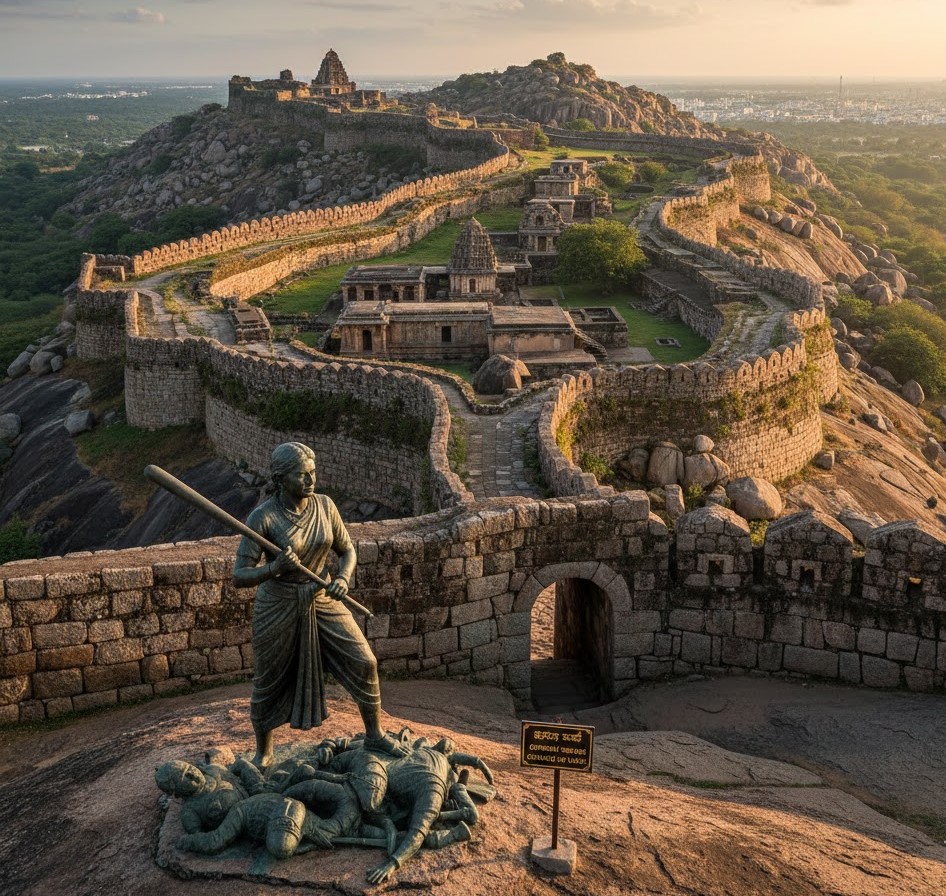
Chitradurga is a historic and culturally vibrant city located in central Karnataka, renowned for its majestic Chitradurga Fort, one of South India’s most formidable hill forts. Built over centuries with seven massive layers of fortification, the fort stands as a symbol of architectural brilliance and military strength. The city is deeply rooted in folklore and history, especially the legendary tale of Onake Obavva, which reflects the bravery and spirit of the region. Surrounded by rugged rocky hills, ancient temples, and sprawling windmill farms, Chitradurga offers a unique blend of heritage, natural beauty, and tradition, making it a significant cultural and tourist destination in Karnataka.
History Of Chitradurga
Chitradurga’s history spans several centuries and reflects the rise and fall of powerful dynasties in Karnataka. Early references to the region appear in inscriptions from the Maurya and Satavahana periods, indicating its ancient roots. Over time, Chitradurga came under the control of the Chalukyas and Hoysalas, who contributed significantly to temple construction and early fortifications. The city reached its greatest prominence under the Nayaka rulers between the 15th and 18th centuries, who developed the iconic Chitradurga Fort into a massive hill fortress with seven concentric layers, strategically designed to withstand prolonged sieges.
The fort became a symbol of resistance and bravery during repeated invasions, particularly by Hyder Ali of Mysore. The most famous episode from this period is the heroic act of Onake Obavva, whose courage and quick thinking helped defend the fort against enemy forces. In 1779, Chitradurga was finally captured by Hyder Ali, after which it passed into British control. Today, the city’s monuments, inscriptions, and fort walls stand as enduring reminders of its valorous past, making Chitradurga one of Karnataka’s most historically significant regions.
Culture & Heritage
Chitradurga possesses a rich and deeply rooted cultural heritage shaped by centuries of history, tradition, and local pride. The city’s culture is closely intertwined with its iconic fort, ancient temples, and legendary tales of valor, particularly the story of Onake Obavva, which continues to inspire generations. Religious harmony and devotion are reflected in the many temples, shrines, and annual festivals that bring communities together in celebration.
Traditional folk arts play an important role in Chitradurga’s cultural identity. Performances such as Dollu Kunitha, along with folk songs and storytelling, showcase the region’s vibrant artistic expressions. Local customs, attire, and cuisine reflect the simplicity and warmth of rural Karnataka life. Seasonal fairs, village jathras, and cultural gatherings preserve age-old practices, while historical monuments, inscriptions, and temple architecture stand as living symbols of the city’s glorious past. Together, these elements make Chitradurga a unique blend of living tradition and enduring heritage.

Geography & Economy
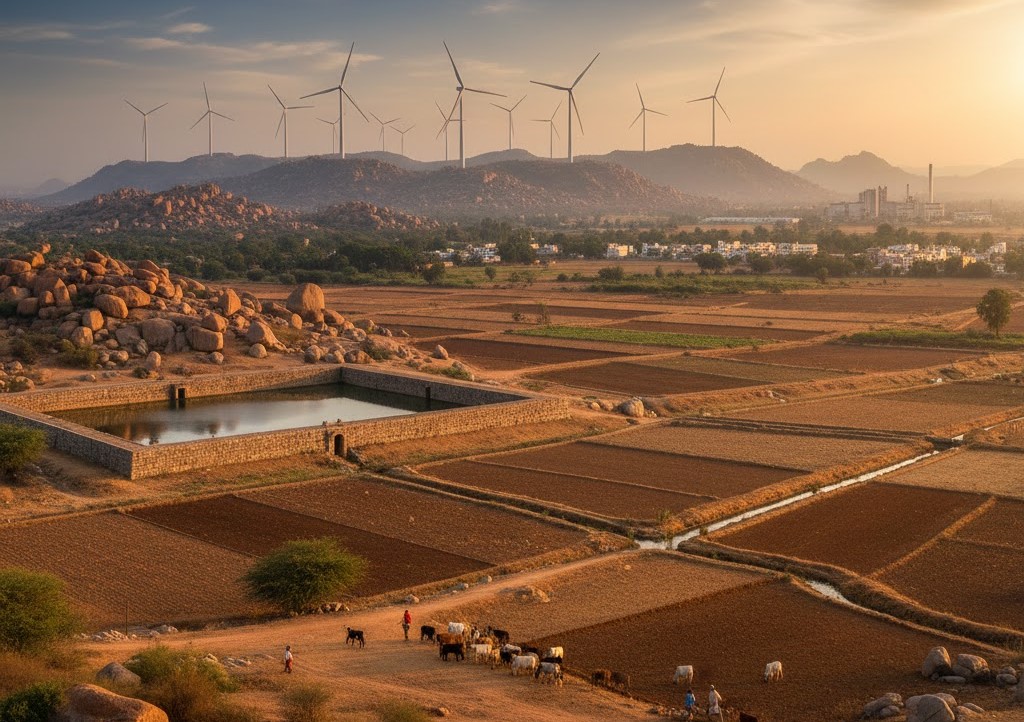
Chitradurga is located in the central part of Karnataka and is characterized by rugged rocky terrain, hill ranges, and wide stretches of semi-arid land. The region lies on the Deccan Plateau, with scattered boulders, granite hills, and natural valleys that once provided strong natural defenses to the historic fort. The climate is generally dry with moderate rainfall, and the area is supported by reservoirs, tanks, and canals that aid agriculture and water management.
The economy of Chitradurga is primarily based on agriculture and allied activities. Farmers cultivate crops such as ragi, jowar, maize, groundnut, onion, and pulses, which suit the dry climate. Animal husbandry also plays a key role in rural livelihoods. In recent years, Chitradurga has gained importance as a hub for renewable energy, especially wind power, with large windmill farms contributing to the local economy. Small-scale industries, trade, and services further support economic growth, making Chitradurga a steadily developing district in Karnataka.
Agriculture Of Chitradurga
Agriculture is the backbone of Chitradurga’s economy, supporting a large portion of the rural population. The district lies in a semi-arid region of the Deccan Plateau, with limited and irregular rainfall, making dryland farming the most common practice. Farmers mainly depend on monsoon rains, along with tanks, canals, and reservoirs for irrigation.
The major crops grown in Chitradurga include ragi (finger millet), which is the staple crop of the region, along with jowar, maize, groundnut, sunflower, pulses, and onion. In irrigated areas, crops like paddy and sugarcane are also cultivated on a limited scale. Animal husbandry, especially cattle and sheep rearing, plays an important supporting role in agricultural livelihoods. Despite climatic challenges, farmers in Chitradurga continue to adapt through traditional knowledge, improved irrigation methods, and modern agricultural practices.

Ragi

Groundnut

Maize

Sunflower

Onion

Pulses
Infrastructure and Connectivity in chitradurga
Chitradurga has strong infrastructure and connectivity, making it an important link in central Karnataka. The city is well connected by road through major national highways like NH-48, which connects Bengaluru, Hubballi, Mumbai, and Chennai, along with NH-50 and NH-173 that link it to northern Karnataka and nearby districts. Its railway station connects Chitradurga to major cities across the state, supporting both passenger travel and freight movement. Though the city does not have its own airport, Kempegowda International Airport, Bengaluru, located about 220 km away, provides air connectivity and is easily accessible by road. With ongoing highway expansions, railway upgrades, and improved urban infrastructure, Chitradurga continues to grow as a well-connected hub for trade, travel, and regional development.